
Charlotte Dunoyer – Head of the Health, Food and Animal Welfare Risks Unit at Anses (testimonial from the “Animal Welfare: Science to Inform Public Policy” dossier -2021)
“Within the Risk Assessment Department of Anses, the unit I lead is dedicated to risks related to animal health, nutrition and welfare. Originally a veterinary surgeon, I started out in the animal feed sector for livestock, then in wildlife health issues at the Fédération nationale des chasseurs, before joining Anses in 2011.
The unit has a total of 10 staff, one or two of whom coordinate the expert assessments on animal welfare, a topic introduced in 2011. For each referral, we set up a group of experts and often call on scientists from INRAE. Collective, adversarial expert appraisals in this area take between 6 months and 3 years, and can focus on either guides to good practice or risk assessment issues. The Animal Health and Welfare Specialised Expert Committee (CES) has had to establish the basis for its expert appraisal work on animal welfare by adopting fundamentals centred on the animal and its feelings: definitions, indicators, type of recommendations, etc. Anses is a member of INRAE’s National Reference Centre for Animal Welfare. We are currently organising ourselves to better distribute the Ministry’s requests according to their nature”.
Testimonial from our thematic dossier
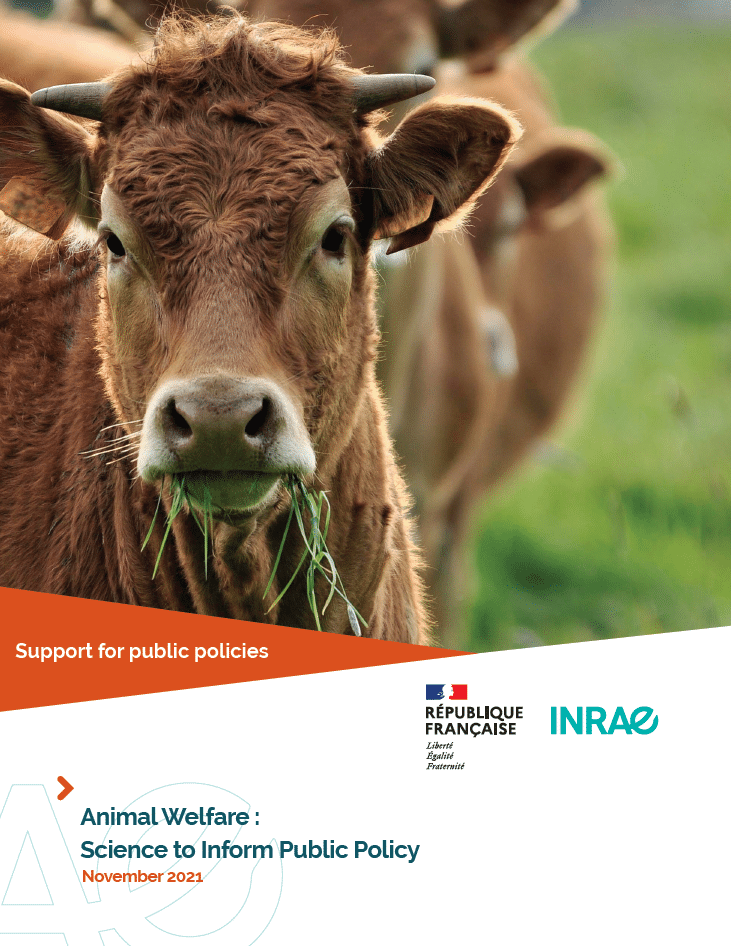
Thematic dossier
Animal welfare: science to inform public policy
Although animal welfare is now a pressing concern in our society, the issue first came to the fore in the 1960s as a reaction to the intensive farming conditions developed to optimise practices and increase economic profitability at the expense of animals. It was in the 1980s, under the impetus of a few pioneering researchers, that the issue of animal welfare began to be taken into account at INRAE.
This dossier retraces the major stages in the Institute’s investment in this area, through Research
and in support of related public policies.