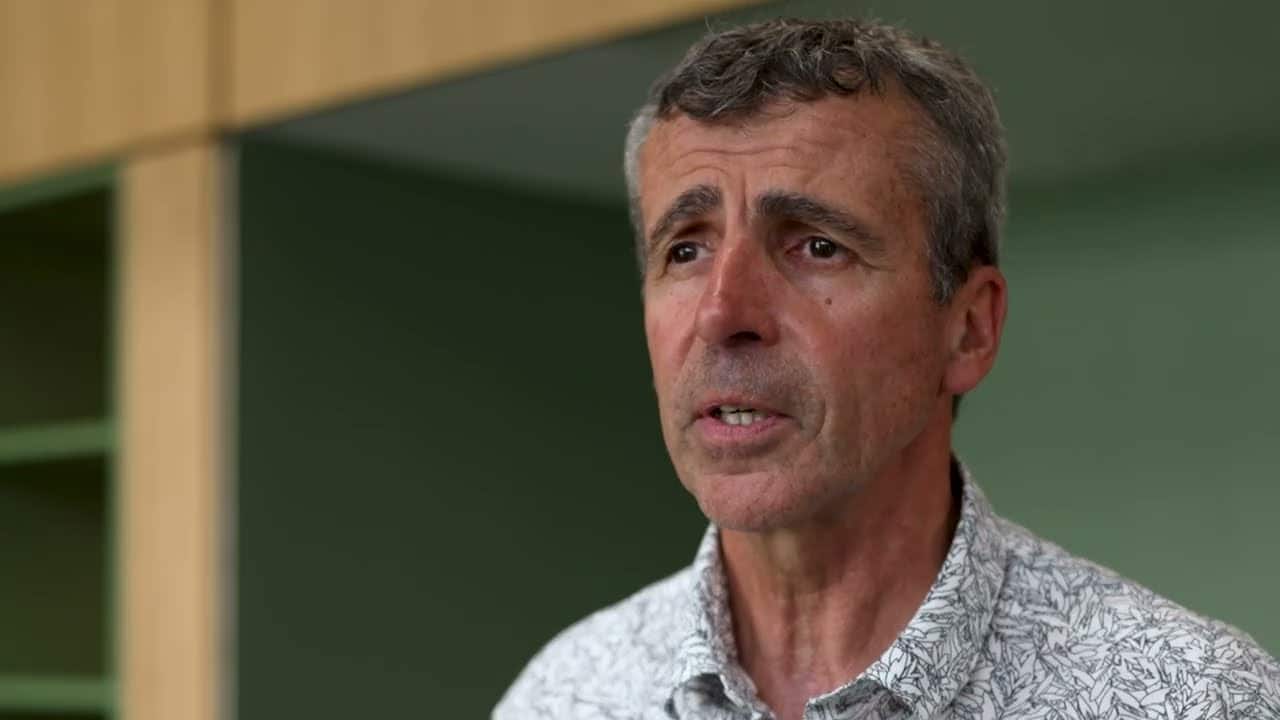
Jean-Michel Soubeyrou, Deputy Scientific Director, Climatology and Climate Services Division, Météo-France (testimonial from the “Explore2 project, hydrological projections to adapt water resource management” dossier – 2024)
“The department in which I work focuses on understanding past and future climate change in France and developing climate services. Within Explore2, I coordinate Météo-France’s contributions to the project. In particular, we have been working on correcting the biases associated with the regional climate models used to produce hydrological projections. These biases concern the spatial and temporal distribution of temperature and precipitation, which are very important variables for hydrology. To reproduce the climate more faithfully, we therefore apply statistical methods that correct these biases. Together with the Explore2 scientific community, we have selected two methods: ADAMONT and CDF-t. The 41 climate simulations chosen for Explore2 combined with these methods have produced a set of 82 climate simulations available as input data for the hydrological models. This represents significant progress compared with Explore 2070, which was based on just 6 simulations.”
Testimonial from our thematic dossier
Thematic dossier
The Explore2 project: hydrological projections to adapt water resource management
The Explore2 project, carried out between 2021 and 2024, aimed to describe the climate and water resources for the whole of the 21st century in mainland France, while ensuring that they are properly used. It produced a set of unprecedented projections in terms of the wealth of models applied and their spatial and temporal resolution, with no equivalent in Europe, thanks to a community of forty or so scientists from different organisations who were mobilised and united around the challenges of climate change. Around a hundred representatives of potential users of Explore2 results have also contributed to the project. Together, and under the guidance of INRAE and IOWater, they have devised useful information that can be mobilised by water managers in their territories. To provide a better understanding of the uncertainties associated with the projections, the scientists have proposed four climate narratives that illustrate the diversity of possible futures. Following the example of the IPCC, they have also drawn up a summary of the main conclusions at the level of mainland France for a set of descriptive variables in the water cycle, while specifying the degree of confidence in these results and the limits of knowledge. All the results of this project, which will have a major impact on water policy in France, are available online.