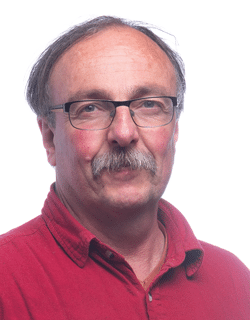
Daniel Hanocq – Experimentation and studies engineer Brittany Regional Chamber of Agriculture (CRAB) (testimonial from the dossier “From the European Nitrates Directive to green algae plans in Brittany: the contributions of INRAE scientists” – 2022)
“I’ve been working with INRAE scientists on the issue of nitrates and soils since 1990, when I joined the Finistère Chamber of Agriculture. We started working with INRAE back in 1973 on the soils of intensive pig farms. In Brittany, intensive pig farms are one of the causes of the increase in nitrates, due to their geographical concentration and therefore their excess. The effluents from intensive livestock farming had to be managed as fertilisers, and land-spreading plans had to be drawn up with farmers. At the same time, regulations were being introduced for storage and the upgrading of livestock buildings and classified facilities. With the emergence of green algae, the plans negotiated between the State and the Chamber of Agriculture in 2010 raised questions within the farming community. Agronomic difficulties led the Regional Department of Agriculture and Forestry to mobilise INRAE researchers. They produced and shared their knowledge with the farming community, and developed technical proposals with us and the technical institute Arvalis. Today, we need to go further on the marine side, in particular to understand the link between nitrates and green algae on the scale of the bay. Considerable progress has already been made: between 2002 and 2018, there was a trend decline of almost 50% in nitrate flows in green algae bays between May and August. Elected representatives act as mediators between the authorities, the prefect and the farming community, and it is essential to pass on knowledge to them.”
Testimonial from our special report
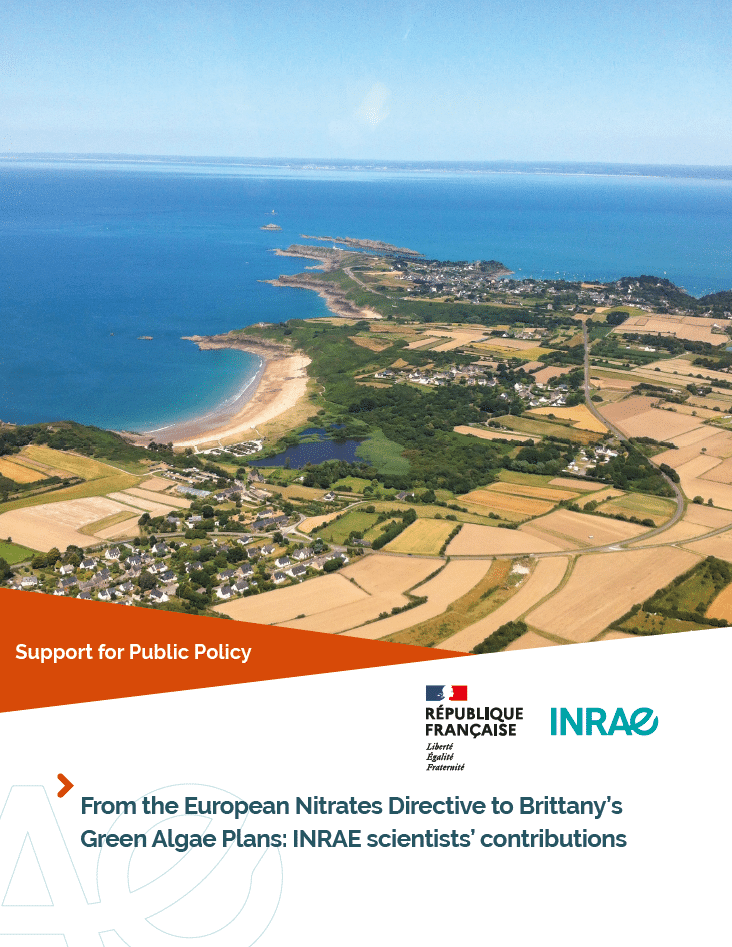
Thematic dossier
From the European Nitrates Directive to green algae plans in Brittany: the contributions of INRAE scientists
Since the 1970s, researchers at the Institute have been studying nitrate flows of agricultural origin from the plot to the catchment area and their impact on the biological balance of aquatic environments. The agri-hydrological models they have developed have provided a better understanding of nitrate flows and helped local players to implement regional policies. With the deployment of plans to combat green algae in Brittany (PLAV), scientists have gradually moved from the position of experts providing advice to that of mediators supporting the various stakeholders by sharing scientific knowledge on the subject. These years of experience have led to the creation of a training course dedicated to new elected representatives who are likely to become involved in the PLAV, capitalising on the knowledge of former elected representatives and on scientific knowledge.