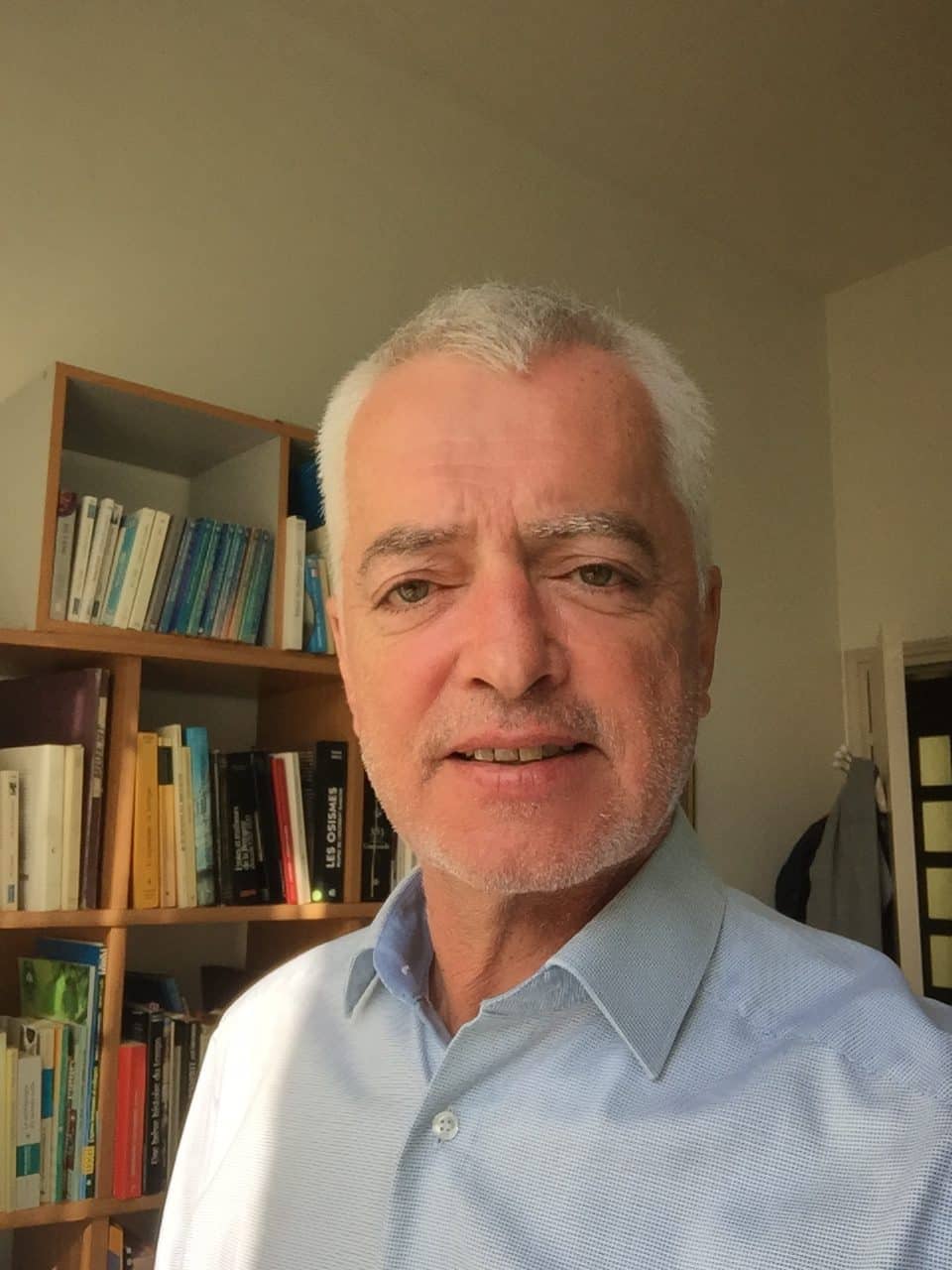
Paul Divanac’h – Mayor of Plonévez-Porzay – Chairman of the Douarnenez local water commission – Chairman of the Assemblée permanente des président.e.s de CLE de Bretagne (APPCB) (testimony from the dossier “From the European Nitrates Directive to green algae plans in Brittany: the contributions of INRAE scientists” – 2022)
Mayor of Plonévez-Porzay, a commune in the Bay of Douarnenez, since 2008, Paul Divanac’h is also Chairman of the Local Water Commission (CLE) and President of the Permanent Assembly of CLE Presidents in Brittany (APPCB). He looks back over the progress made in controlling algae, both in terms of structuring water management and in relations with scientists.
You were at the launch of the first PLAV – what role did scientists play in it?
“In 2010, faced with the growing problem of green algae and against a backdrop of tension between nature conservation associations and the farming profession, the two ministers for Agriculture and the Environment launched the PLAV, the 1st Plan to combat green algae. These PLAVs were rolled out for each of the eight bays concerned, and were supported by the communities of communes, the Brittany region, the General Council and the Water Agency. I presented the PLAV for the Bay of Douarnenez to the scientific council set up at the time, as well as to the regional prefect. The scientific council recommended that the eight projects should be more demanding in terms of objectives and deadlines, and proposed a gradual reduction in nitrogen levels at the outlet to 10mg/l between 2012 and 2027, a difficult objective for the stakeholders to achieve. Eventually, the plans were approved and, from July 2012, we began to implement the actions in the Bay of Douarnenez.”
How was public action structured in the bays?
“From 2012 onwards, a public institution for bay management was established and the local water committee set up, as in the eight bays affected by seaweed. The CLEs are preparing the water management plans, the SAGEs, which will incorporate the PLAV’s objectives. Scientists will support the development of the SAGEs and the dynamics at local level. For the implementation of the 2nd PLAV, there is no longer a scientific council, but scientific support for the steering and monitoring committees; a resource and expertise centre is supported by the Regional Council of Brittany and Creseb, run by the scientists.”
Since 2017, the eight bays have spoken with one voice in the Permanent Assembly of the presidents of the CLEs in Brittany. Where do we stand today?
“Today the situation has improved and the atmosphere is calmer. In 2010 in the Bay of Douarnenez, 12,000 tonnes of seaweed were harvested each year; today, the average is down to 3,000 tonnes. These improvements have been made possible by adapting practices and the regulatory framework, but they are also the result of a certain agricultural decline that has become more pronounced in recent years. We have an arsenal of methods and a well-structured organisation. The links between science and public decision-making are in place, even if many questions remain unanswered to this day on the precise role of wetlands for example.
Testimonial from our thematic dossier
Thematic dossier
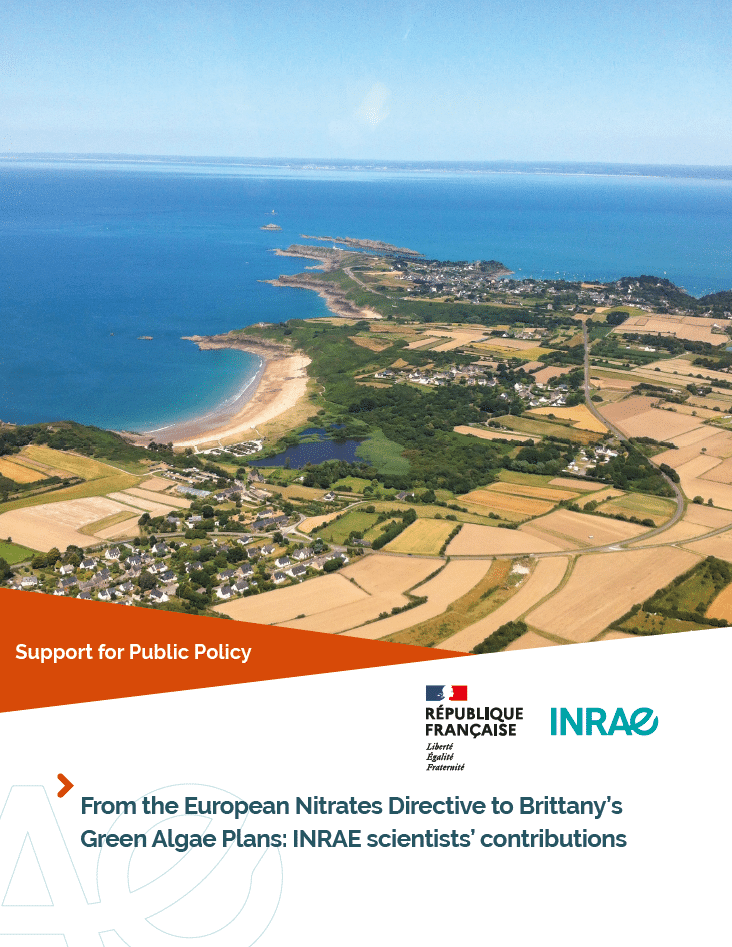
From the European Nitrates Directive to green algae plans in Brittany: the contributions of INRAE scientists
Since the 1970s, researchers at the Institute have been studying nitrate flows of agricultural origin from the plot to the catchment area and their impact on the biological balance of aquatic environments. The agri-hydrological models they have developed have provided a better understanding of nitrate flows and helped local players to implement regional policies. With the deployment of plans to combat green algae in Brittany (PLAV), scientists have gradually moved from the position of experts providing advice to that of mediators supporting the various stakeholders by sharing scientific knowledge on the subject. These years of experience have led to the creation of a training course dedicated to new elected representatives who are likely to become involved in the PLAV, capitalising on the knowledge of former elected representatives and on scientific knowledge.