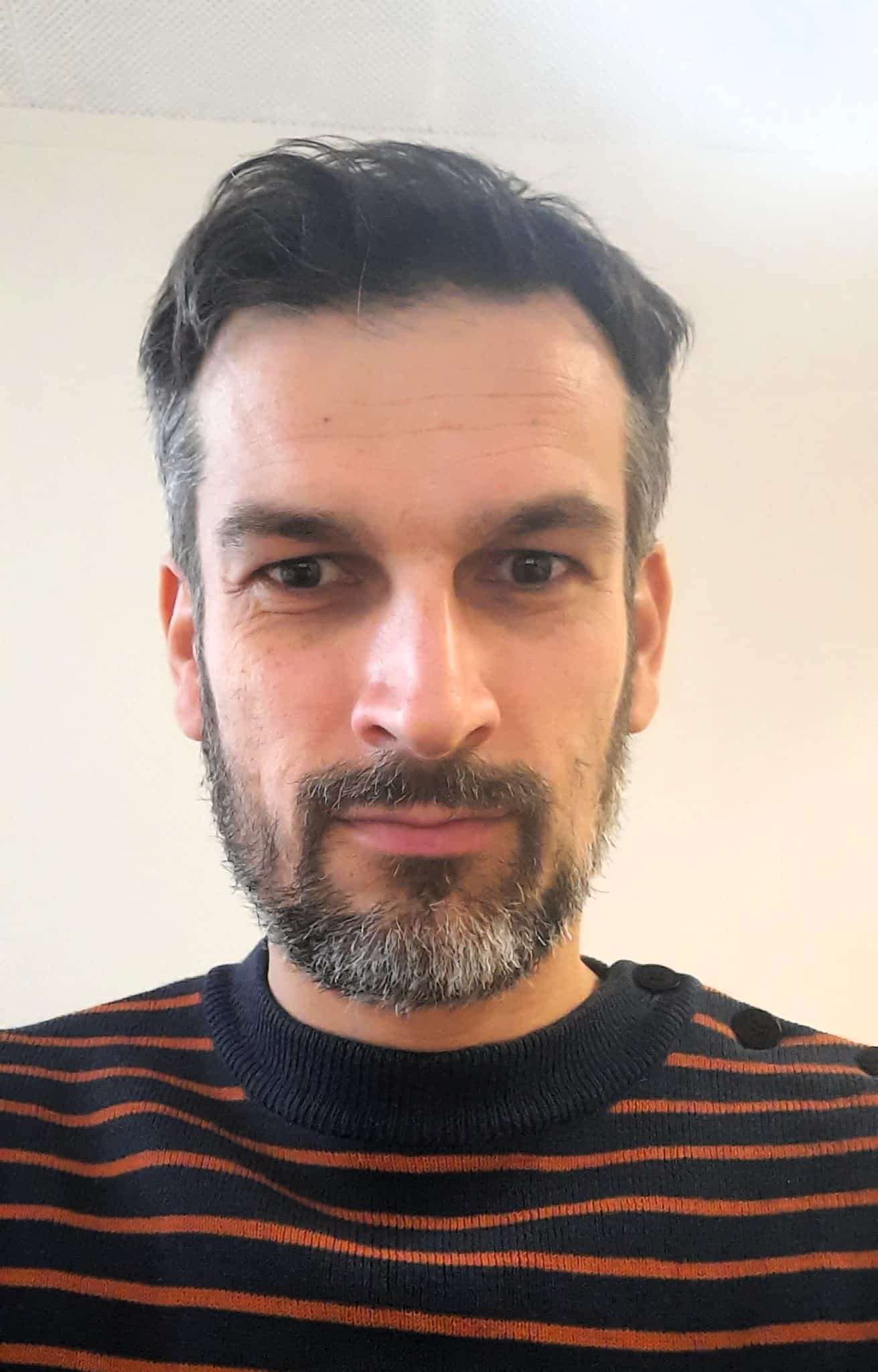
Emmanuel Steinmann, Head of the Soil Water and Circular Economy Office within the Environmental Performance and Territorial Development Sub-Directorate of the Competitiveness and Environmental Performance Department of the General Directorate for the Economic and Environmental Performance of Companies, Ministry of Agriculture, Food Sovereignty and Forestry (testimony from the dossier “Info&Sols, a partnership-based system for soil knowledge and monitoring in France” – 2024)
The Ministry of Agriculture and Food Sovereignty (MASA) co-chairs the GIS Sol. What are the challenges involved in improving soil knowledge and monitoring?
“Since 2023, I have been in charge of the Water, Soil and Circular Economy Office, which is responsible for water policy at the Ministry of Agriculture. Our sub-directorate has co-chaired the GIS Sol with the Ministry for Ecological Transition (MTE) since it was set up in 2001. We support the GIS Sol and to date I have taken part in five meetings of the GIS Sol High Committee.
The GIS Sol brings together organisations that produce data on French soils. It also produces maps to help steer public policies and local projects. Agricultural and forest soils are a production medium. They are also a living environment that is a source of biodiversity, which farmers need to take care of, requiring special management. As far as public policy is concerned, soils and MASA are part of a ‘regulatory’ framework, with a view to the European directive on soils and the agroecological transition.”
The agreement with the GIS has just been renewed. What changes does this involve?
“The GIS Sol is responsible for the soil information and monitoring system. It is responsible for producing and collecting data, as well as making use of it. The question of how the data is used and accessed was central to the renewal of our agreement with GIS Sol. The legal status of the data is essential for its dissemination, some of it being produced by GIS Sol and others recovered from analysis laboratories. The Ministry is calling for the sharing of this data, which needs to be “anonymised” at the relevant geographical level. The issue of land ownership restricts the dissemination of soil data on carbon or pollutants, which can be collected at plot level. For example, the BDAT collects more than 100,000 analyses per year from analysis laboratories carried out by farmers. Making the most of these data requires considerable resources. MASA has therefore renewed its confidence in GIS Sol.”
What can the forthcoming European directive bring?
“Today, soil is not the subject of a specific public policy. It is regulated in terms of biological monitoring, nitrogen levels, chemical pollution, land ownership, etc. The European directive will set a clear objective for monitoring and restoring soil health. Our two ministries, with their complementary skills, will be working together to manage soil and its organic matter, fertility, biodiversity, pollution and water and CO2 capture. The Info&Sols team is currently anticipating the requirements of the forthcoming EU text with regard to the GIS programmes that produce the data. France is ahead of the game when it comes to soil data and monitoring. The directive aims to help restore all European soils to good health by 2050, which will require in-depth research in partnership with INRAE.”
Testimonial from our thematic dossier
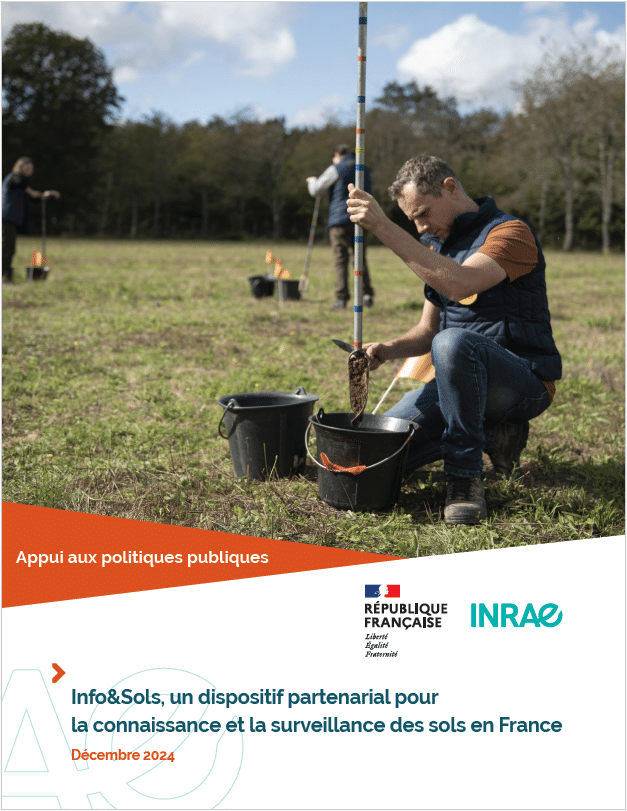
Thematic dossier
Info&Sols, a partnership-based system for understanding and monitoring soil in France
At the interface with water, air, rock and living organisms, soils are living, fragile environments that need to be preserved. They are at the heart of crucial global issues for the planet and for our own survival. Yet in Europe, over 60% of soil is degraded. This dossier looks at the establishment of a soil knowledge and monitoring system in France, the public policies that have benefited from these scientific advances and the emerging issues surrounding soil.