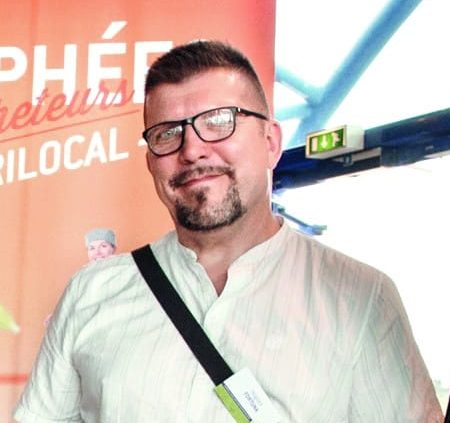
Hugues Fortuna, Director of the Avignon municipal catering service (testimonial from the dossier “INRAE for healthy and sustainable food in school catering”- 2025)
How is the city of Avignon implementing school catering in its area?
After several years working for large private catering groups, I arrived in Avignon in 2013, where I was involved in the end of the public service delegation for its school catering. At the time, the new municipality wanted to apply in-house management methods again and support a policy of ‘eating better in canteens’. It was a motivating challenge to make the link between school catering, the environment and public health. Everything had to be rethought. The kitchen staff are essential to move from simply assembling products to preparing them. The municipal dietician draws up the food plan, which the chefs turn into menus in the various canteens. Particular attention is paid to products’ local origin and quality. For example, 100% of the meat we serve is ‘organic’ and produced around twenty kilometres from the kitchen. The Agrilocal platform helps us to connect with short-circuit farmers-producers. Apprentice butchers from the Avignon training centre then carve the beef before it is served in canteens. In this way, a dynamic is created in the local economic fabric. Today, 70% (by weight) of the food on the plate is produced locally using quality produce. We are also working on low-carbon, plastic-free delivery by bicycle, and supporting employment by purchasing raw vegetables and fruit packaged in units by disabled workers.
How does the city of Avignon rely on research in school catering?
The city of Avignon has been working with research since 2016, and even more so since joining the European FoodSHIFT 2030 project. This project supports innovative local sourcing experiments in a number of cities, with a view to rolling them out more widely. Scientists carry out their research in our communities, and we put concrete questions to them that they can shed light on. For example, following the work of an economist, we opted to pool certain services with neighbouring municipalities. Sociologists and nutritionists have made the link between young people’s high consumption of processed and very sweet products, and their rejection of quality food in the canteen. The “breakfast in the canteen” scheme is being tested to further extend the quality offer, as is table service to combat wastage, and the use of stainless steel food containers instead of plastic. By studying or co-constructing our actions, the scientists give weight to our choices. They validate and help us to put into practice the model we want to develop. Avignon is a medium-sized city with limited resources, like many others in France that could draw inspiration from our experiments.
Testimonial from our thematic dossier
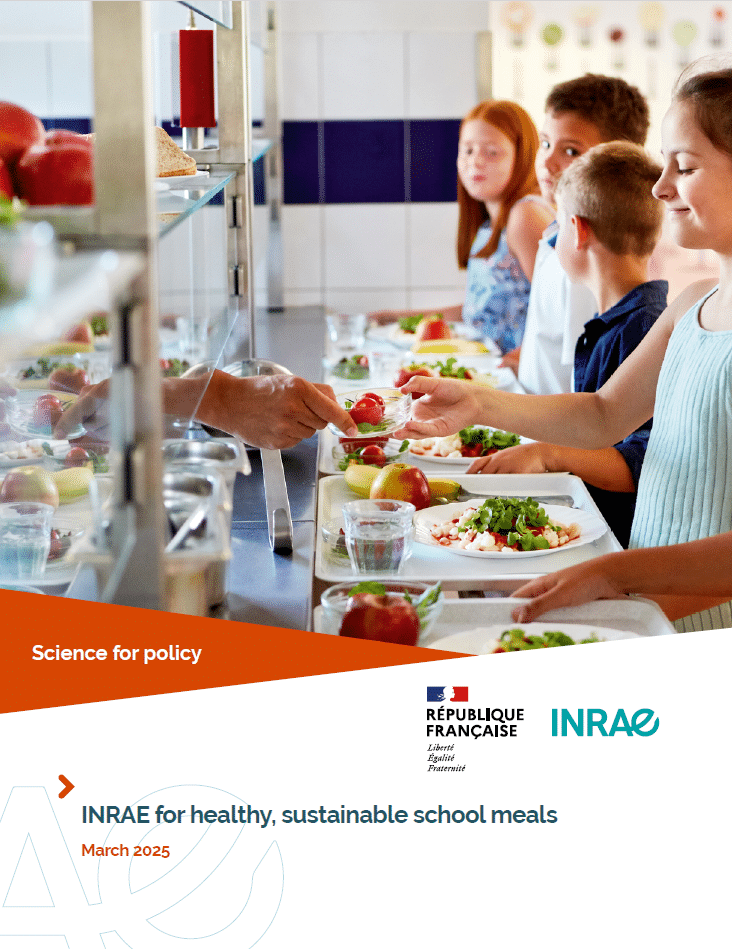
Thematic dossier
INRAE for healthy and sustainable food in school catering
In France, the challenges of school catering now go beyond simply providing a meal. In addition to the educational challenge of fostering healthy eating habits in future adults, there are public health, food safety and environmental issues to consider. The introduction of organic, quality and sustainable products in the canteen is now a priority. Nutritionists, sociologists, agronomists and economists from INRAE are helping to draw up, implement and evaluate public policies in this highly regulated sector.