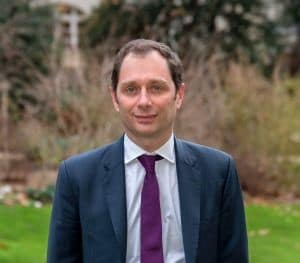
Cédric Prévost – Deputy Director of support for food and agro-ecological transitions, Ministry of Agriculture and Food Sovereignty (testimonial from the dossier “Food and territories: INRAE scientists in support of territorial food projects” – 2023)
What were the Ministry’s expectations of these public food policy tools, the TFPs?
“Territorial food projects are defined by law, with a framework that sets out the broad lines and main objectives without making them a rigid mechanism (articles L1-III and L111-2-2 of the French Rural and Maritime Fishing Code), making them innovative mechanisms for implementing public policies as part of voluntary, bottom-up approaches by local players. The public authorities have supported the roll-out of these projects through calls for projects under the NAP since 2016, and then by setting up a labelling scheme from 2017. With the Covid crisis, the TFPs emerged as a key instrument for developing local food resilience, by promoting the anchoring of food in local areas, hence the implementation of a dedicated measure to support them as part of France Relance. As a result, the number of TFPs has risen from 41 at the end of 2020 to over 400 by 2023.”
What is the need for scientific knowledge for local food policies in general and TFPs in particular?
“The Directorate-General for Food, and the Sub-Directorate for Support for Food and Agro-Ecological Transitions in particular, develops, implements and evaluates its public policies in close collaboration with scientific expertise. On the health front in particular, the Agence nationale de sécurité sanitaire de l’alimentation, de l’environnement et du travail (Anses) is regularly called upon to assess food-related health risks in order to inform public decision-making. The relationship with INRAE is just as valuable, whether through the Observatoire de l’alimentation (food observatory), producing structuring collective expert reports or relations with certain researchers on targeted themes, in particular TFPs. Support for TFPs was built up empirically, with the establishment of a ‘national network of TFPs’ project led initially by the Terres en villes association, joined by Chambres d’agriculture – France. This project includes a workstream linked to research as part of the National Observatory, with INRAE associated with the technical and scientific committee of the national network of TFPs (RnPAT). In addition, the ‘local food’ joint technology network (RMT) contributes to work on TFPs. However, TAPs are long-term projects and have only recently become a subject of research, at least in some areas. We now need to gather and share existing data to better characterise them.”
There is a growing need to assess and measure the social, health, environmental and economic impact of these projects on local areas, and too little research is being done in this area. After several years of deployment in the regions, what does the future hold for TFPs?
“As highlighted in the recent report by Senator Frédéric Marchand, the TFP scheme is widely supported by the majority of stakeholders. However, at this stage in the deployment of projects, most of which are still in the emergence phase, the movement still needs to be consolidated, structured and expanded. Without this, and without the provision of human and financial resources, there is a risk that the momentum will run out of steam after the impetus provided by France Relance. As part of the consultations underway to draw up the national strategy for food, nutrition and the climate (SNANC), notably via the National Food Council, the TFPs are mentioned as levers to be perpetuated and strengthened. After a phase of territorial deployment over the last few years, their reinforcement, by broadening their operational actions, should therefore have its rightful place in the implementation of the SNANC guidelines through the actions of the future PNA and PNNS.”
Testimonial from our thematic dossier
Thematic dossier
Food and regions: INRAE scientists supporting regional food projects
Over the last 60 years, the places where food is produced, processed and consumed have gradually moved further apart: from farm to fork, the distances have increased. Faced with this phenomenon, local authorities have gradually demanded that they ‘reclaim’ their agri-food systems. INRAE scientists have been working closely with local players on these issues, in particular the ACT department, which has been conducting research into territorial dynamics for almost 40 years. In 2014, the deployment of ‘territorial food projects’, a new tool in local food policy, called on a wide range of scientific knowledge and methods, now involving several INRAE departments. This dossier is an initial look at the involvement of INRAE scientists in the implementation of local food projects.