Share
Did you know that invasive species cause a loss of biodiversity and cost the world’s economies billions of euros?
In a new study from the InvaCost project published in Nature Ecology & Evolution, an international consortium including an INRAE researcher estimates the economic impact of invasive species on our agricultural, health, food and water systems. Their work estimates the costs of these invasions to be 500 times higher than previous estimates, which lacked data from several countries and included only a small number of invasive alien species. These costs are already higher than those of natural disasters, and will increase exponentially in the future with the rise in biological invasions.
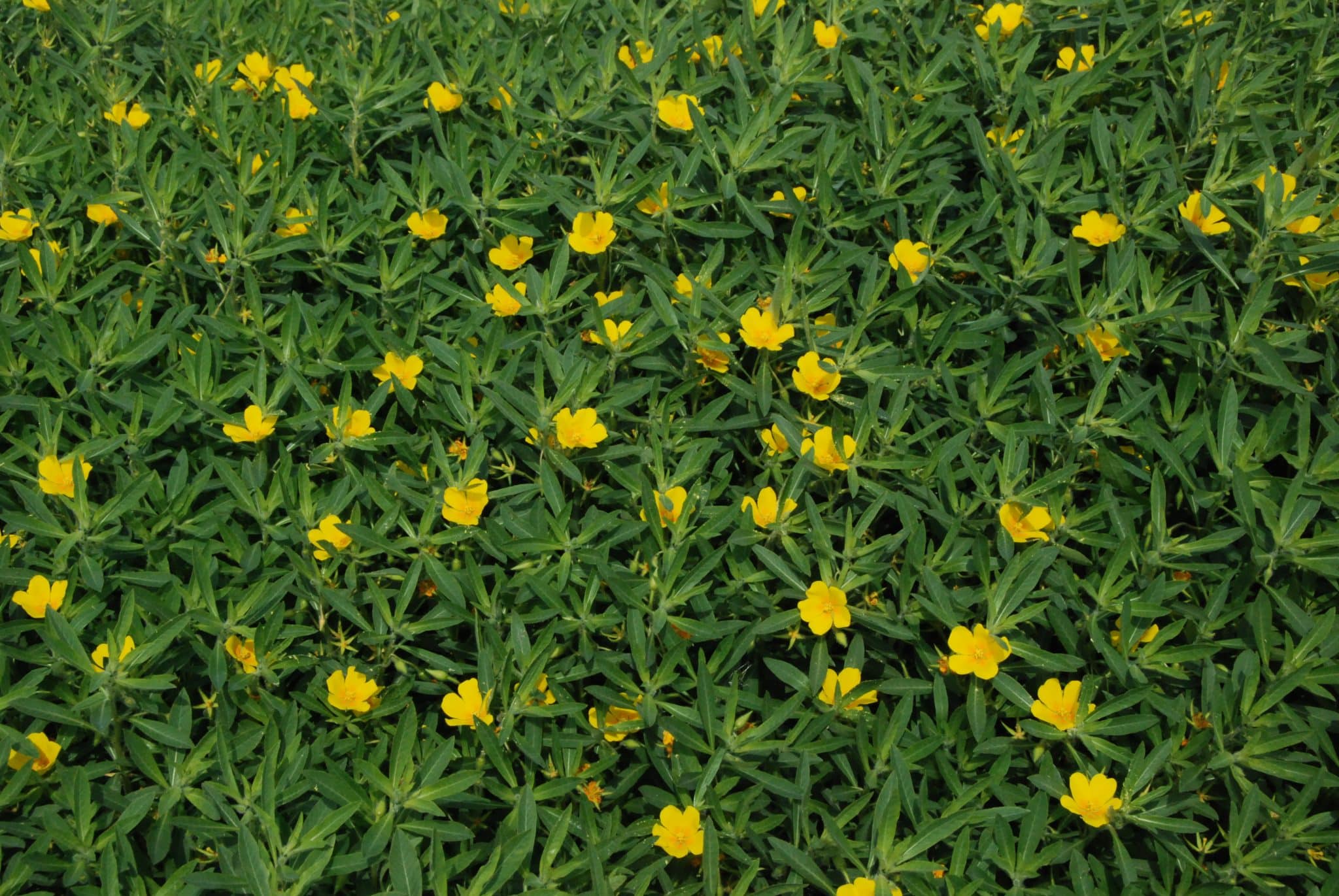
Pierre Courtois, a researcher at the Centre d’Économie de l’Environnement in Montpellier and a member of the InvaCost project, is also working on the design of bio-economic tools to help decision-makers deal with biological invasions. In particular, he coordinates the SPABIO project in partnership with the Brière Regional Nature Park. In this project, Pierre Courtois is using the case of the biological invasion of primrose willow, an aquatic plant native to South America, to build bio-economic models capable of assisting in the management of different invasive alien species in a variety of contexts. The aim is to meet managers’ needs to know where, when and how to manage invasive alien species. These new models combine an ecological population dynamics module with an economic module in collaboration with managers to integrate the priorities, objectives and constraints of the areas affected by a biological invasion.
To find out more, click here:
Photo : Ph. Saget, CC BY-SA 3.0 https://creativecommons.org/licenses/by-sa/3.0, via Wikimedia Commons