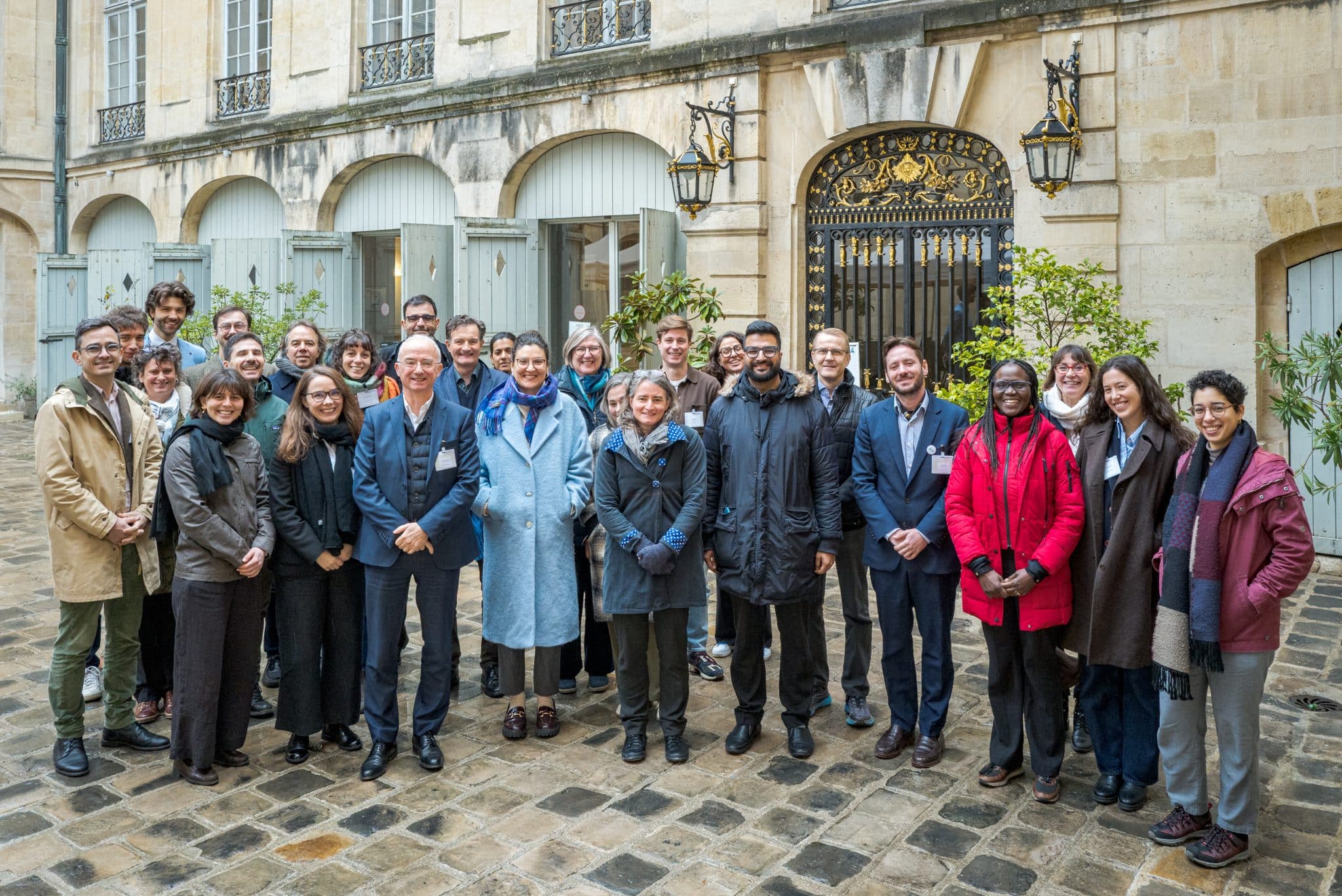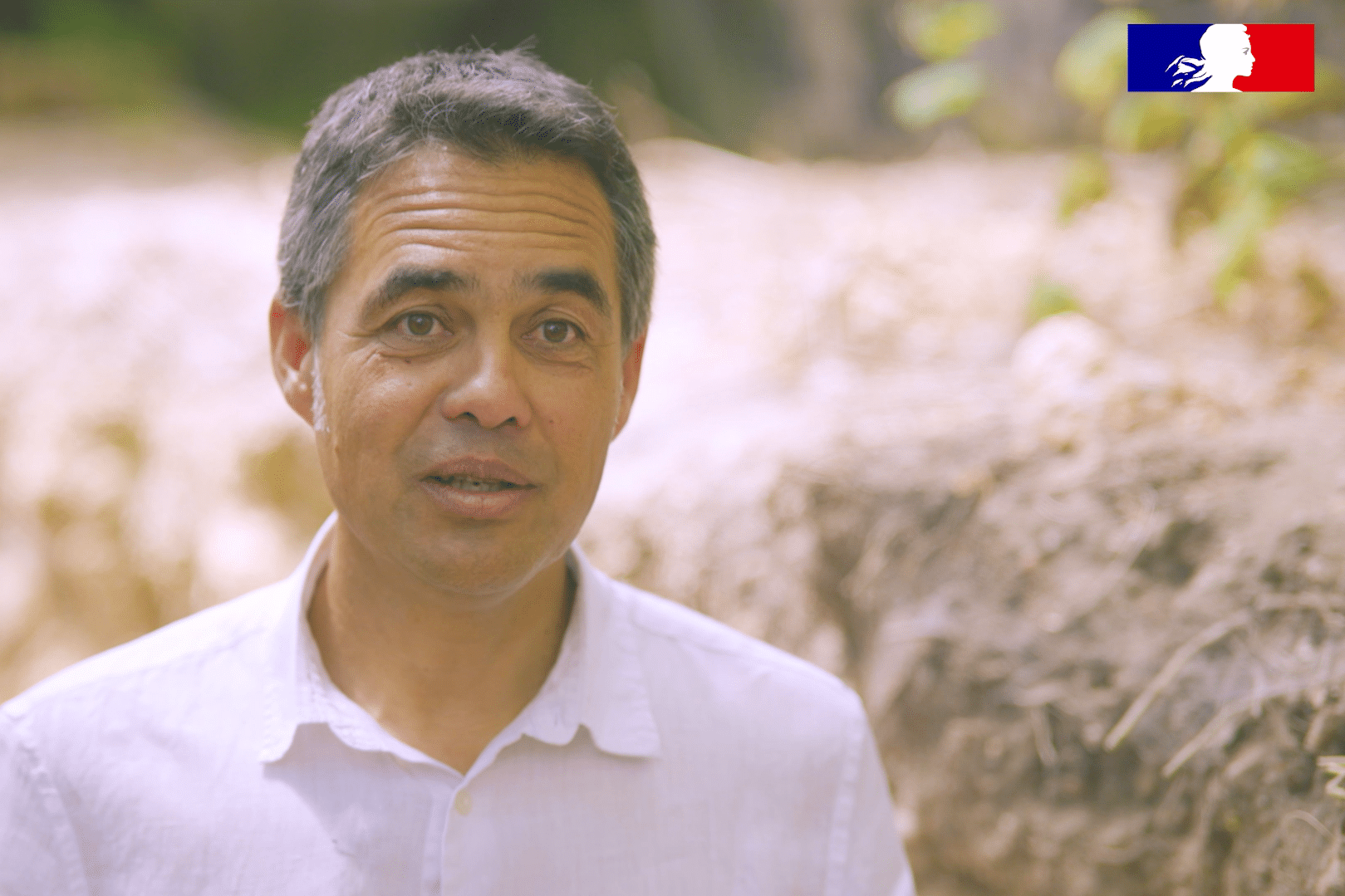
Claudy Jolivet, soil scientist at INRAE, presents the Réseau de Mesure de la Qualité des Sols (RMQS) (Soil Quality Measurement Network) that he coordinates. The aim of this GIS Sol programme is to monitor changes in soil over time by analysing various parameters, including carbon, pH, granulometry, contaminants and biodiversity. Its team can calculate carbon stocks, soil fertility, pesticide residue levels and other indicators according to the needs of GIS partners or public policies.
The programme is based on the monitoring of 2,240 sites, spread over a 16 x 16km grid, in mainland France and the overseas territories (in conjunction with the IRD). The sites are re-sampled approximately every 12 to 15 years, and all the samples are kept (so that the properties measured can be supplemented according to needs and methodological advances). The scientists in the Info&Sols unit working for the RMQS are thus able to qualify the soils, and learn more about their condition, their functions and the services they provide. Their work also involves characterising changes in the soil, assessing the pressures and threats to which it is subject, and in some cases, the impact of its degradation on other environments, using reliable and robust indicators.
For more than 20 years, the RMQS has been a key programme in supporting agricultural, climate and environmental policies, while at the same time being a forerunner in light of the forthcoming new European directive. The GIS Sol has made it possible to network all those involved in public policy and provide them with valuable data to meet their needs.
To find out more, click here:
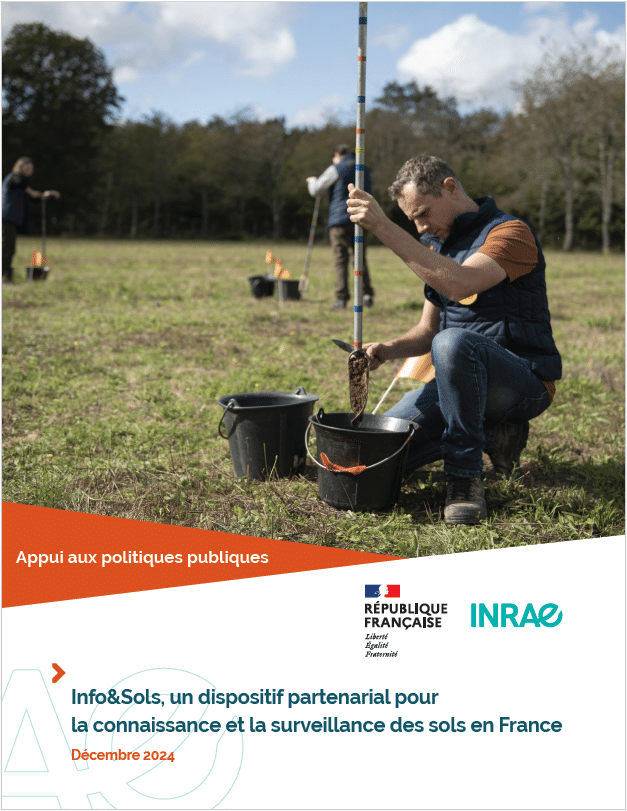
Thematic dossier
Info&Sols, a partnership-based system for soil knowledge in France
In France, the work carried out since the 1990s and the creation of the Groupement d’Intérêt Scientifique Sol (GIS Sol) have made it possible to set up a national soil information system, based on soil inventory and monitoring, thus anticipating the European framework. This dossier retraces the development of this system, presents the public policies that have benefited from the data produced by this national system, and discusses the challenges of soil science research on a European scale.
-
What the scientists say
Measuring soil quality to anticipate future public policies
“The aim of this programme is to monitor changes in soil over time by analysing various parameters…”

Claudy Jolivet
Soil scientist and research engineer at INRAE, coordinator of the RMQS
Explore other “What the scientists say” articles